
Based on some of the recent blog posts, readers may get the impression that I only deal with the “dead and dying” pipes of the world, those with significant damage or trauma. This is, however, far from the truth. The majority of repairs and restorations that pass across my bench are far simpler jobs, but simple doesn’t necessarily mean insignificant.
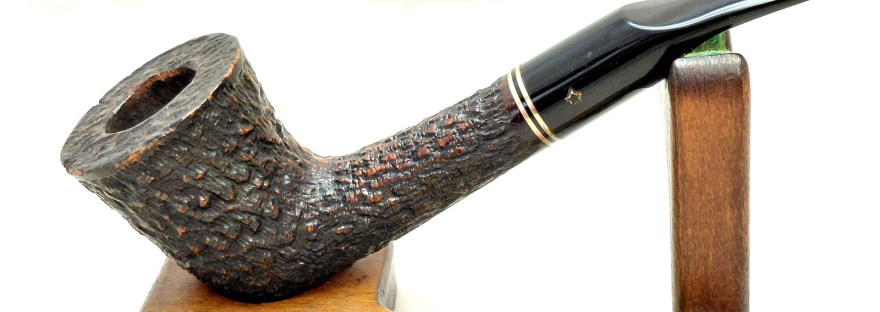
Take today’s subject pipe as an example. This Mauro Armellini Hand Made Dublin arrived at the shop in decent used condition, though as you can see from this initial series of images, the pipe was a bit tired and uninspiring looking. The finish was dull, the rim cloaked in a crust of carbon “lava” and the stem was crisscrossed by fine scratches and sported a few deeper tooth dents on top and bottom near and across the button.


You can only just begin to make out the textured surface lurking under this buildup of carbon.


The pipe is marked with the Armellini Star logo on the left flank of the stem and with “Mauro Armellini” over “Hand Made” over “Made in Italy” on the smooth underside of the shank.


Twisting the stem out of the shank reveals a clump of tarry carbon deposits on the end of the tenon. This is not uncommon with estate pipes, but I sometimes wonder why people allow this kind of obvious crud to build up.

While I had the stem in hand, I ran a few pipe cleaners dipped in 99% isopropyl alcohol through the airway. Given the crust of carbon on the tenon, I had expected more tars inside the stem than what I found.

There was only a light layer of cake in the chamber of this pipe, which I dressed off with sandpaper wrapped around a dowel. Underneath, the briar chamber walls were in great shape. I then addressed the shank and airway, using more pipe cleaners and cotton swabs dipped in alcohol to remove a moderate amount of tars and debris from the stummel’s internals.

So far, the work had gone quickly but I got bogged down somewhat as I turned my attention to the crust of carbon obscuring the entire surface of the rim. It’s hard to believe right now that the rim has the same rustication as the rest of the stummel. Uncovering this texture was a bit of a slog with dental pick and wire brush.
In all, I likely spent 30 -45 minutes methodically picking away the carbon from the briar before scrubbing the exterior of the stummel with Murphy’s Oil Soap and a toothbrush to remove years of dust, dirt, wax and grease from the finish. Sadly, the photos of this process have gone AWOL.

With the stummel now clean, I set it aside to rest while I took a closer look at the damage to the stem. This is an Acrylic stem, so, unlike Vulcanite, it can be patched with CA glue to make a completely invisible repair. CA (or Cyano-ACRYLate) glue is closely related to Acrylic and it is this close bond that allows for a seamless patch.
One note: I no longer use CA glue to patch Vulcanite or Ebonite stems. The materials are too disparate and the repair only looks good while the stem remains unoxidized and polished. Those of you with Vulcanite pipe stems at home know that Vulcanite doesn’t stay black without regular maintenance, so inevitably, oxidized Vulcanite begins to shine through from underneath a CA glue patch and is impossible to polish out without removing the patch completely.
CA glue is also much harder than Vulcanite, which has some flex to it. I have had CA glue patches simply pop out of a stem when bitten down on by the smoker, which can be a surprise, to say the least.
Here you can see the CA glue I flowed into and over the damaged areas of the Acrylic stem after giving the surfaces a light sanding. For deeper dents, multiple applications may be necessary to build up the material. Colouring in the dent with a black Sharpie before applying the clear glue is a nice trick for getting everything black again.


I let the stem sit overnight to give the CA glue sufficient time to cure completely, then I sanded the patches smooth using sandpapers in 220 through 2000 grit. Each successive grit removed the scratches left by the last grit. The final sandpaper’s 2000 grit is essentially the same as Red Tripoli buffing compound, so there is no need to hand sand beyond 2000 grit unless you do not have access to a buffing wheel.

These two pics are a bit fuzzy, but you can see that the CA glue patches have blended completely into the surrounding Acrylic, rebuilding both the button and the bite zone of the stem.


To finish off this project, I took the complete pipe to the buffers for a run on the Red Tripoli and White Diamond wheels followed by several light coats of Carnauba wax to add shine and a touch of UV protection to the restored pipe.
This Armellini Hand Made Dublin is once again looking every inch the artisan grade pipe. The finish has been cleaned and polished and all traces of old carbon cake, dirt and debris have been removed from the fairly hefty chunk of briar. The Acrylic stem looks brand new and boasts a deep glassy shine set off by the brass trim rings on the stem. Even more noticeable when compared to the original pictures, the rim of the bowl is, well, VISIBLE for the first time in years. The thick crust of carbon lava is gone, revealing the original rusticated finish underneath.
For a relatively quick and simple restoration, the results are really quite dramatic. I hope you’ve enjoyed watching the artisan grade pipe emerge from the dirt, dust and dents – I certainly have! Better yet, the pipe’s steward has appreciated having this lovely Italian pipe returned to his rack and rotation looking as close to new again as possible. That’s a win all around!
Until next time, Happy Piping! Here’s the finished pipe.


 dadspipes.com
As always Charles… you made this pipe beautiful…
Using the super glue… are there any concerns about it being absorbed into our bodies… I figure not… since you use it… but just curious..
Blessings…
Rick
LikeLiked by 1 person
Hi Rick. Great question!
If you look up a Safety Data Sheet for CA glue, you’ll see lots of warnings to avoid ingestion, getting it in your eyes or on your skin, or inhaling the fumes generated by the curing process. These are all based on uncured (aka liquid) CA glue.
Thankfully, CA glue is inert once cured, so it poses no risk of harm in this application. In fact, CA glue is used as an instant bandage in hospitals to seal cuts without stitches. Long story short, don’t drink CA glue out of the bottle, but accidentally swallowing a chip of cured CA glue won’t hurt you at all.
LikeLiked by 1 person
Thanks… I appreciate your sense of humor too… Charles…
LikeLiked by 1 person