

Anyone who has taken a look through past posts here or on other pipe restoration blogs will know that stem replacement is one of the most common repairs, and with good reason. The stem is where the (Vulcanized) rubber meets the metaphorical road for pipe smokers. Stems are regularly dented or bitten though by teeth. Buttons are cracked and stems shattered by falls or impacts. Knowing how to fit replacement stem is a baseline skill for the pipe repairer.
For this tutorial, I’m working on a Savinelli Oscar that arrived with a punctured stem. This series of images shows the pipe’s condition on arrival in the shop. Not bad overall, but it needed a good cleaning and, of course, a new stem.


The pipe is stamped “Oscar” over “Aged Briar” , followed by the Savinelli crest and a shape number, “4005”.

Step One for all repairs is to clean the pipe. As a rule, I ream the chamber and clean the shank and airway as well as the exterior of the pipe for every repair. At a minimum, the shank and airway must be clean before fitting a new stem to ensure a proper fit of the stem tenon in the shank mortise.
I reamed the old cake form the chamber and cleaned a crust of carbon deposits form the rim of the bowl.

Then I got stuck in to clearing the shank and airway of a surprising amount of tars and other goodies. Any attempt to fit a new stem with all this gunk in the shank would have resulted in a loose stem when the pipe was eventually cleaned.

The stummel smelled rather ripe after its cleaning, so I set it up overnight with an alcohol soak. This is not strictly necessary for a basic stem replacement, but it’s mostly a passive process and can produce surprising results as the alcohol works on the deep-seated tars.

Here is the pipe after a night with cotton and alcohol in the bowl and shank. As you can see, the alcohol treatment loosened up quite a lot of old gunk that needed to be removed.


With the stummel clean and prepped, it was time to start fitting the new stem. The easiest way to do this that I have found is on a lathe, but it could also be done using a tenon-turning tool such as this one available through Vermont Freehand, albeit with a little less accuracy.
If you’re going to be turning stems on a mini lathe like mine, I highly recommend the stem holder shown on the left of the pic below. I bought mine from Rawkrafted.com years ago, though I don’t see it on their website currently. Of course, if you have a lathe, you can make your own stem holder if so inclined. It’s basically a socket with groove cut down the sides to hold the button end of pipe stem.
The steward of the pipe in question had requested an Acrylic replacement stem rather than another Vulcanite stem, so that’s what you see mounted between the stem holder and a live centre in my lathe. This setup allows the stem to rotate around an axis parallel to the airway. I’ve cut down the tenon using the triangular cutting tool shown at the bottom of the image to just a hair over my target diameter. The heat generated by the cutting tool tends to expand the tenon material ever so slightly, so I stop short of my mark and finish the tenon by hand if necessary.
This is also the stage at which I would size the barrel of the stem to rough size as well, but as it turned out, the pre-cast stem blank was only slightly larger than the pipe shank, so I decided to size it by hand later.

Shaping the body of the stem to fit the shank can be a bit tricky as every pipe is a little different. Funny how that happens with organic materials! Even hand-made pipes can be drilled slightly off-centre or have a slightly irregular shape.
The other major challenge at this stage in the stem fitting process is keeping the shank as close to factory as possible. In a perfect world, the files and sandpapers used to shape the stem never touch the shank, but in reality that is hard to accomplish. I use tape of varying thicknesses to protect the shank from errant file strokes during the rough shaping. This pic shows the pipe with the new stem filed down to match the diameter of the shank.
Since I’m fitting a Saddle stem, I’m looking for a smooth transition from shank to stem and a uniform saddle portion that maintains the diameter of the shank all the way along the saddle. There should be no obvious increase or decrease in the saddle diameter.

After the rough file work is done, it’s time to switch to sandpapers. I use 220, 320, 600 and 2000 girt papers, the latter two being wet/dry sandpaper. Each grit removes the scratches left by the previous grit to prepare the stem for buffing and polishing.

Buffers and buffing can be a hot topic among pipe restorers, mainly because there are a lot of options available. Most pipe-making pundits agree that a low-speed buffer (1625rpm) is the ideal tool for buffing and polishing a pipe, but there are many experienced restorers who use high-speed buffers at 3450rpm quite effectively. Six or eight-inch wheels are the most common, but again there are those that use smaller or larger wheels. One restorer I know uses a one inch cotton wheel on a Dremel running at its lowest speed. I would never feel comfortable doing that, but he gets some amazing results.
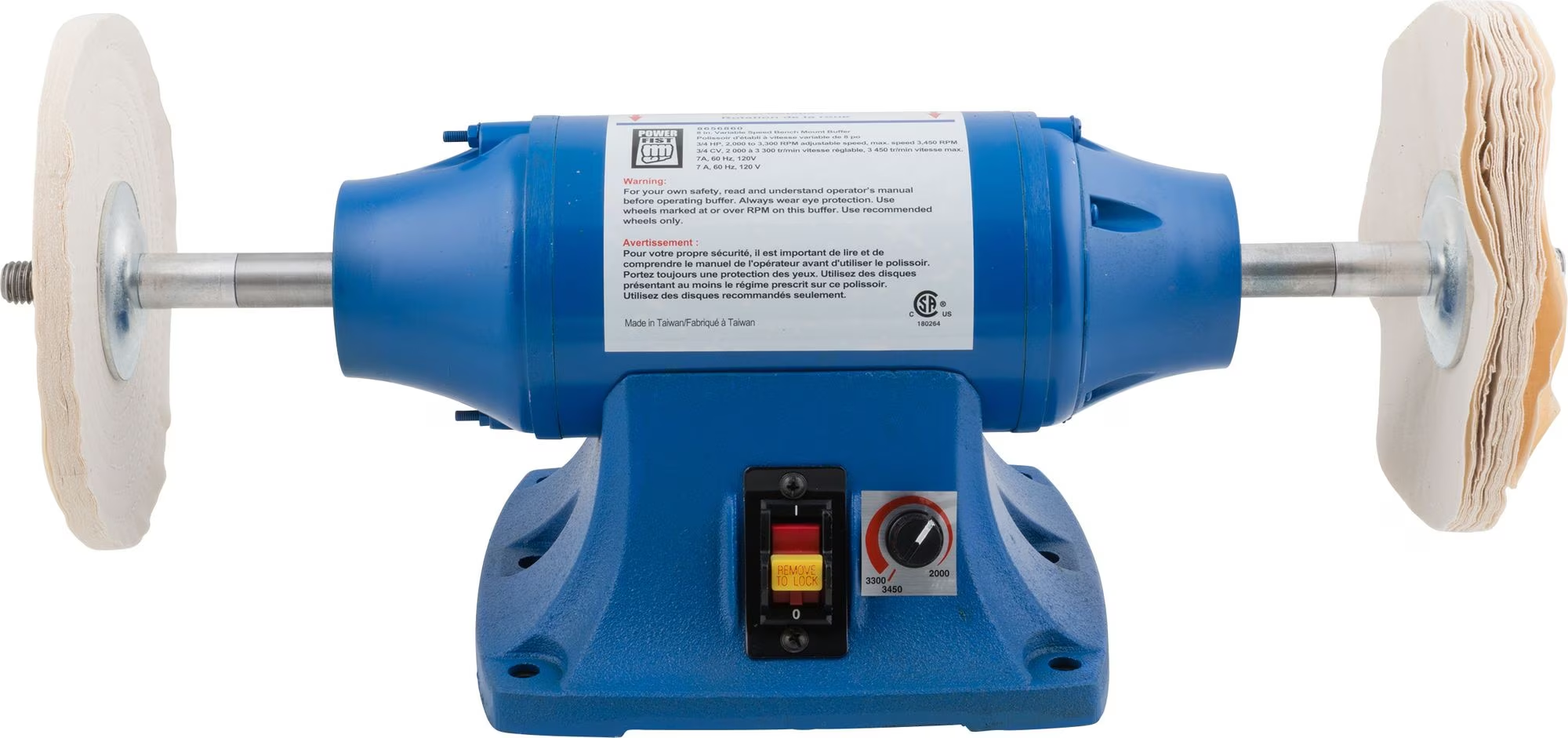
The long and short of it is that you need at a minimum a cotton buffing wheel mounted to some kind of motor arbor that spins the buff against the pipe. You’ll also need some buffing compounds – Red Tripoli and White Diamond compounds are the most commonly used – and a bar of Carnauba wax. Each compound gets its own wheel, as does the wax, to avoid cross-contamination. You don’t want the larger grit from Tripoli compound getting mixed into your fine grit White Diamond compound or your Carnauba wax.
Buffing a pipe is a mix of art and science. I get the wheel spinning up to speed, apply a bit of compound and then bring the pipe into contact with the wheel just below the centre line. Avoid pushing the pipe into the compound as you can stall the wheel or burn the pipe. Instead, let the compound do the work for you. I find that a light touch and a firm grip get the job done best.
Warning – the buffing wheel can and will try to throw the pipe at the floor or across the room if you’re not paying attention. The wheel can easily grab the edge of the stem or the point of a diamond shank and tear the pipe out of your hands, so be mindful when you’re at the buffer. I like to hold the pipe with the thumb of one hand in the chamber and the other hand holding the stem, but figure out what works best for you.
Getting back to the pipe, I finished this stem replacement by buffing the stem and stummel on both the Tripoli and White Diamond wheels followed by a light coat of Carnauba wax. An Acrylic stem doesn’t oxidize like a Vulcanite stem does, so wax isn’t strictly necessary, but I do it out of habit for every pipe. Vulcanite stems will stay black longer with the UV protection provided by the Carnauba wax.
And there we are! The pipe is clean, fresh and looking great with its new Acrylic stem. With a little care and feeding, the pipe should serve for many trouble-free years.
I hope you enjoyed this short tutorial. If you’d like to see more, please comment below. Until next time, Happy Piping! Here’s the finished pipe.


 dadspipes.com