
Today’s pipe was sent in by a fellow Canadian pipe lover for a bit of TLC, including an overall cleanup and a new stem to replace the original that had seen better days.
As you can see in this initial series of images, the pipe is a Soren Hand Made Danish Freehand with some lovely plateaux briar on the rim and a Vulcanite shank extension. The pipe was in decent estate condition, but showed some carbon buildup in the nooks and crannies of the plateaux rim, darker patches of dirt on both sides of the bowl and a heavily oxidized shank extension and stem.


These close up shots of the stem show just how deep the tooth dents are just behind the button. The stem is a twin-bore mouthpiece, with two airways exiting the end of the button to create a “bite-proof” Vulcanite stem, but one side was crushed completely closed, while the other was partially blocked by a bit of old pipe cleaner.
As I was tasked to replace the stem anyway, I twisted it out of the shank extension and set it aside uncleaned. It would be headed for the bin after the new stem was shaped.


The shank is marked “SOREN” over “Hand- Made” over “Made in Denmark” on the underside of the shank.

I removed a light amount of old carbon cake form the chamber using sandpaper wrapped around a dowel. A wire brush removed the worst of the carbon caught in the plateaux rim.

A small handful of pipe cleaners and cotton swabs dipped in 99% isopropyl alcohol cleared out some old tars and bits of tobacco from the shank and airway.

A quick wipe with alcohol on a cotton pad removed the dirt, grease and grime from the exterior of the stummel.

The last thing to tackle on the stummel rehab was the Vulcanite shank extension. These can be tricky to deoxidize as dropping the entire stummel into an Oxyclean bath is not practical. Instead, I did some careful wet sanding with 800 and 2000 grit sandpapers to remove the worst of the oxidized Vulcanite before using the Red Tripoli buffing wheel to power out the remaining discolouration.

As this Vulcanite shank extension would be paired with a black Acrylic replacement stem at the request of the pipe’s steward, it was important to get the Vulcanite looking its best. It will, of course, oxidize again over time and with exposure to sunlight, so the pipe’s steward will need to stay on top of the maintenance to keep the shank extension black.

With the work on the stummel complete, I could turn to shaping and fitting the replacement stem. Here is the original stem shown above the rather generic Acrylic stem blank selected for the project.

After some careful measuring, I mounted the replacement stem blank in the lathe and marked out the location and size of the fluted detail at the tenon end of the original stem.

And here are the results of a few minutes of work on the lathe. The stem blank has been turned to diameter and the fluted detail has been added. The perspective of the image seems to show the new tenon as smaller than the original, but it does indeed fit snugly in the shank mortise, despite being a hair too long at this stage.

Turning the stem blank to diameter left some ragged edges in the profile. A bit of time with various files smoothed out the raw shape and created a smooth flow from tenon to button.

When I was happy with the overall shape and profile of the new stem, I put away the files and moved to sandpapers, sanding the new stem with 220 through 2000 grit to remove the file marks and prepare the acrylic for final buffing.

Before taking the pipe to the buffing wheels, I added the required bend to the new stem. Bending Acrylic takes a bit more heat than bending Vulcanite, but the process is the same.
A pipe cleaner slipped through the stem’s airway prevents accidentally kinking the airway while the stem is heated over a heat gun until pliable. The stem is then bent, and the new shape set by running the stem under cold water.

Then it was off to the buffer again for final polishing. I gave the entire pipe a light run on both the Red Tripoli and White Diamond wheels, followed by a few light coats of Carnauba wax to add shine and some UV protection to the finished pipe.
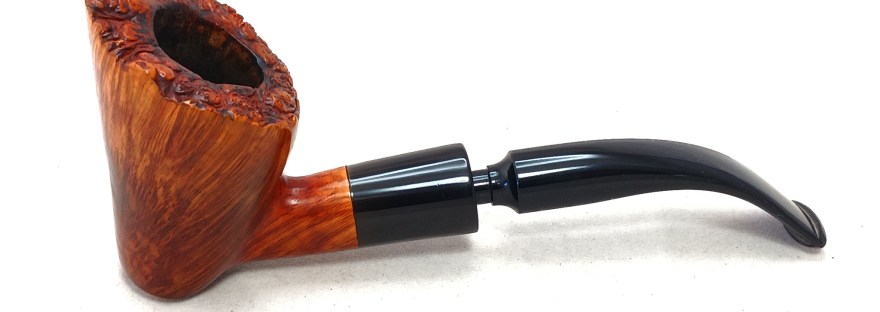
This restored Soren Hand-Made Danish Freehand is once again looking its best. The briar is fresh and clean, ready to show off its lovely vertical grain, set off against the deep black of the shank extension and new stem. The pipe is ready to provide many years of reliable smoking companionship to its steward.
I hope you enjoyed following along on this estate pipe restoration project. Though not overly complicated, this post shows the power of a good cleaning and polishing and the value in taking the time to reproduce the original details of the stem.
Until next time, Happy Piping! Here’s the finished pipe.


 dadspipes.com