
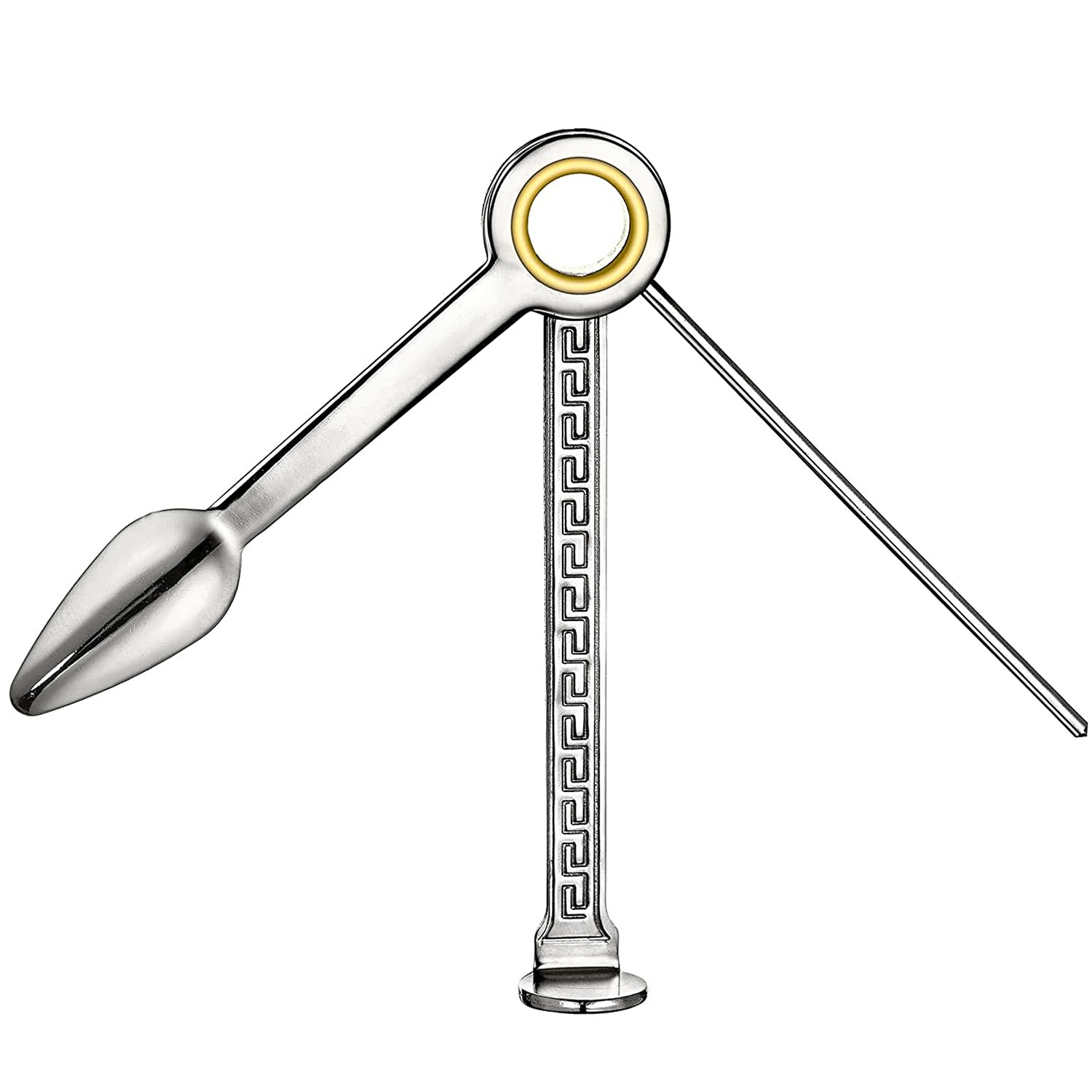
Shank obstructions are a fact of life for many smoking pipes, so much so that a long, thin shank reamer is part of just about every pipe tool on the market. Typically not much more than a length of stiff steel wire, shank reamers are designed to push through a blockage in the pipe’s airway to remove a wad of unburnt tobacco, cotton fluff from pipe cleaners and the like. The ubiquitous Czech Tool, which combines a tamper, scraped and shank reamer in one handy gadget, can be found in virtually every pipe smoker’s kit.
There are times, however, when a simple shank reamer simply will not do. Such was the case with today’s pipe, a handsome London made Astley’s Straight Apple. The original stem had suffered a fall of some kind, chipping off part of the button end and snapping the tenon off inside the shank of the pipe. This series of images shows the pipe as it looked when it arrived on the bench.
Clearly the stem needed to be replaced, while the stummel could benefit from some TLC to remove the crust of carbon lava from the rim and a mild layer of cake from the chamber.


This shot looking straight up the shank reveals a nice mess. Lodged in the shank are the remains of the Vulcanite tenon, a fair bit of tars and debris, and a glint of steel. Apparently, the pipe’s steward had attempted to use a screw to extract the broken tenon, but instead managed to snap the end off the screw instead. Ouch!

The shank stamps, through worn nearly flat, can be made out in good lighting. They read “Astley’s” over “109 Jermyn St” over “London”. The stamps are cut off slightly by the sterling shank band, indicating an aftermarket repair.

Job #1 was to clear the shank obstruction, and it proved to be quite a job. Even my smallest needle-nosed pliers couldn’t get a grip on the chunk of steel screw lodged in the remains of the tenon. Drilling the screw out risked damaging the shank and/or the walls of the mortise, and even alcohol refused to penetrate the blockage.
I needed to get a little creative on this one! In the end, I used a tiny, 1.5mm drill bit to carefully bore a series of holes around the outer edge of the screw, then snapped the thin connections between these holes with a dental pick. This created just enough wiggle room to loosen the end of the screw and remove it from the shank.
This image shows the broken end of the tenon, still lodged in the shank, after I finally got the end of the screw removed.

And here’s the culprit, finally exposed to the light of day. It’s amazing that such a tiny piece of metal could create such problems!

With the blockage dealt with, I could use more conventional techniques to extract the broken tenon. After adding some alcohol to the shank to dissolve some of the stickier tars, I was able to thread a screw of my own into the tenon and pull the whole piece out en masse.

As you can see in these pics, all the fiddling and failed attempts to remove the blockage had left a few scars near the shank end of the mortise. The close-up shot reveals a fair stack of tars still blocking the draft hole. There was some cleaning work ahead of me yet.


I began the cleanup of this vintage old Astley’s pipe by reaming the chamber back to briar using my reamer set and some sandpaper wrapped around a dowel.

Underneath it all, the chamber was in great condition.

It took surprisingly few cotton swabs and pipe cleaners dipped in more alcohol to remove the tars and other goodies from the shank and airway.

This pic shows the state of the mortise at this point in the work. Much better, but there was still a ways to go.

The deep-seated tars needed some encouragement to let go of the briar, so I packed bowl and shank with cotton wool and filled the pipe with more 99% isopropyl alcohol. After propping the stummel upright in an old egg crate, I left it for the night to give the alcohol time to work its magic.

When I returned to the shop the next morning, the cotton had turned from white to a dingy brown, indicating just how much tars were lurking within. The alcohol had slowly dissolved the tar deposits, which had been wicked into the cotton wool. Yummy!

I removed the cotton from the stummel and gave the internals another quick cleaning to get any last remaining tars out of the pipe. I allowed the stummel to rest long enough for the leftover alcohol to evaporate, then started work on fitting the new Vulcanite stem.
After turning the tenon of the new stem to diameter, I gave it a test fit in the shank and took a few pics. As you can see, I used a large round taper stem here, as none of my oval taper stems were large enough. I’d have a fair amount of excess material to remove to make the stem look original, but that’s much easier than adding material to an undersized stem.


As I was evaluating the new stem, I discovered that the tenon was a tiny bit wobbly in the shank mortise – I could shift the stem side to side, pivoting the tenon very slightly over some irregularity in the mortise. My guess is that the many attempts to clear the shank blockage had introduced a tiny deformity into the mortise walls, and in a game where success or failure can be measured in hundredths of millimeters, this irregularity would need to be addressed.
To that end, I spent some time carefully lining up the stummel on my drill press. With everything set as accurately as possible, I very gently re-drilled the mortise a hair larger and a whole lot smoother.

The refreshed mortise was now too large for the integral tenon on the replacement stem, so I quickly made up a new tenon from a short section of Delrin rod. This pic shows the stummel test fit to the new tenon. This time, I achieved a snug fit with no wobble.

After cutting off the integral tenon and drilling an appropriate socket for the Delrin tenon, I roughed up the Delrin to promote a solid bond with the epoxy used to glue the new tenon into the stem face.

With the glue applied and the stem slipped into place, I added a wrap of tape to hold things in alignment as the epoxy cured overnight.

When I came back to the pipe, I removed the stem and chased the airway with a drill bit to remove any excess epoxy. I could then remount the stem to the shank and begin shaping the round taper profile to match the oval shank. Note the wrap of clear hockey tape over the sterling band to protect it from errant file strokes.

As I got close to final dimensions, I switched from files to sandpaper, working my way through various grits between 220 and 2000 grit. You’ll also note the switch from hockey tape to thinner masking tape protecting the shank. This allows me to get closer to the band without scratching it.

When I was happy with the stem sanded to 2000 grit, I took the entire pipe to the buffers for a run on the Red Tripoli and White Diamond wheels to erase any stray sanding scratches and bring up the shine. A few coats to Carnauba wax provided a lovely gloss finish and some protection from UV light.
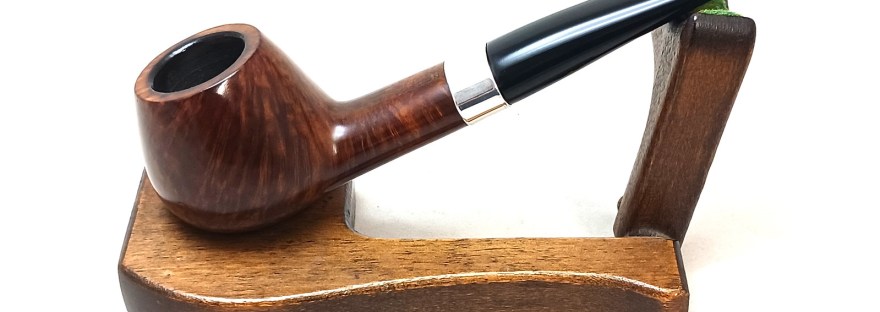
The finished pipe has gone from bedraggled to bewitching in its short time on the bench. Clean, fresh and back to factory spec, this Astley’s Apple is ready to provide its steward with many more years of faithful smoking companionship.
I hope you enjoyed watching this lovely English pipe come back to life as much as I did. Until next time, Happy Piping! Here’s the finished pipe.


 dadspipes.com
Beautiful save, Charles. This one goes in my file bucket 🤠.
LikeLiked by 1 person
Thanks, Dal. Once that pesky screw came out the rest was pretty straightforward. Glad I had such a tiny drill bit on hand!
LikeLike