
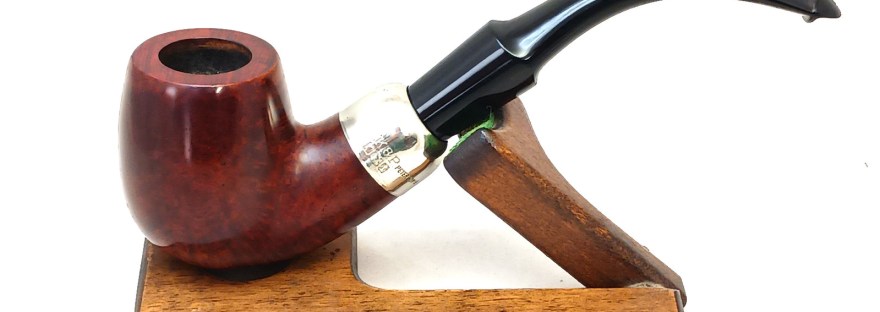
After a Spring and Summer of Hand Cut stems and special projects, it’s nice to be able to write about a much simpler restoration. The pipe on the bench today is a vintage Peterson System 3 in shape 357. It was sent in by a fellow Canadian pipe lover for a bit of TLC.
As this initial series of images shows, the pipe was in reasonably good estate condition. It was a bit dirty and showed dark patches on the left and right sides of the bowl where a previous steward’s fingers gripped the bowl. The rim had a light crusting of carbon and several patches of road rash on the outer rim, likely acquired through careless dottle-knocking over the years. The P-Lip stem was oxidized and had a patch of adhesive residue left behind by a sticker of some sort.


The stamps on the stummel’s left shank are a bit hard to read due to being double-struck, but they can be made out. They read “Peterson’s” (with forked tail on the P) over “System” over “3” over “357”. If I’m reading Mark Irwin’s excellent book, The Peterson Pipe, correctly, the 357 pipe shape is a Grade 3 version of Peterson’s 307 shape. It entered the Peterson catalog all the way back in 1896 and was discontinued after 1937, so this pipe has been around for at least 87 years!
The nickel shank cap is stamped with “K&P” over Peterson’s trio of faux hallmarks (Shamrock, Fox and Tower) followed by “Peterson’s” in block letters. Interestingly, the pipe has no Country of Manufacture stamp.
I suspect the shank cap is a later replacement. This is based on several observations: the shape of the shank cap is much flatter than I would expect a pre-WWII Peterson shank cap to be, the stamping is missing any mention of a Patent, and finally, the cap is slightly oversized for the shank.

While I was inspecting the pipe, the shank cap came off in my hand. This image shows that a thick layer of glue was used to secure the cap in place.

With the pipe’s provenance sorted, I moved on to the initial cleaning. I used cotton swabs wetted with saliva to gently break down and remove the carbon crust from the rim. It might sound a bit gross, but human saliva contains natural enzymes that break down tobacco tar and other goodies really well without damaging the finish underneath.

With the mess out of the way, the extent of the rim dents became clear.


Moving on to the stem, I used a small handful of pipe cleaners and cotton swabs dipped in 99% isopropyl alcohol to remove a small amount of tars and debris from the airway. A System stem is easily recognizable by its wide airway at the tenon end. Starting at around 5mm in diameter, the Peterson System airway tapers down to approximately 2.5mm at the button. This design allows moisture to condense out of the smoke and run back down the stem into the reservoir in the pipe’s shank.

With the stem’s airway clean, I popped the stem into a bath of Oxyclean and warm water to soften the oxidation. While it soaked, I moved on to the stummel. The crust of old glue surrendered fairly easily to my pen knife, after which it was back to the cotton swabs, pipe cleaners and alcohol to clean out the shank, airway and reservoir.


To make sure that all the old tars and any ghosts of tobaccos past were exorcised from the briar, I set the stummel up for an alcohol treatment. I slid a pipe cleaner through the airway, then packed the bowl and shank with cotton wool before filling the stummel with isopropyl alcohol. I propped the stummel upright in an old egg crate and left it overnight to give the alcohol time to work its magic.

And here is the pipe when I returned to it the following day. As you can see, the alcohol dissolved the deep-seated tars, which were then captured in the cotton wool. After removing and discarding the spent cotton, the pipe was left smelling much better than it had the day before.

Now that the briar was clean and fresh, it was time to address those rim dents. The trick here is not to remove so much briar that it changes the profile of the bowl in any noticeable way. I used a combination of gentle bowl topping and light sanding to smooth out the worst of the damage. Given the pipe’s age, any tiny imperfections remaining are character marks.


When I was happy with the rim, I wet sanded the briar to 2000 grit, then touched up the finish with a bit of Fiebing’s Dark Brown leather dye. With just a bit of work the new stain blended seamlessly with the original finish. Nice!
A wipe of Mineral Oil over the refinished stummel helped to set the stain and inject some moisture into the dry briar. I allowed the oil to sit on the surface of the stummel for a minute or two before hand buffing away the excess with a clean soft towel.

I set the stummel aside to rest briefly while I completed the work on the stem. An overnight in the Oxyclean soak has raised and softened the old oxidation and grime from the surface of the stem, making it easy to scrub away with a bit of 0000 steel wool and Magic Eraser. This pic shows the stem after this stage of cleaning.

The Oxyclean soak can leave the surface of the stem slightly rough, so I wet sanded the Vulcanite with 600 and 2000 grit sandpaper. A few dots of thick CA glue reattached the nickel shank cap to the stummel.
Then it was time to take the complete pipe to the buffer where stem and bowl had a run on the Red Tripoli and White Diamond buffing wheels. This erased any stray sanding scratches remaining and brought up the shine. A few light coats of Carnauba wax over the entire pipe added more shine and a layer of UV protection.
This pre-WWII Peterson System 3 357 is looking great after its time on the bench. The briar is clean, fresh and glows with new life, while the Vulcanite stem shines a deep black, offset by the silvery sheen of the polished nickel shank cap. With a little care and feeding, this 87+ year old Peterson should last its new steward a lifetime.
I hope you enjoyed watching this old timer come back to life – I know I did! Until next time, Happy Piping!
Here’s the finished pipe.


 dadspipes.com
Wow, looks like a new from the factory pipe! Sometimes and easy restoration is a welcome respite!
LikeLiked by 1 person
It certainly is! And yet I’m always impressed with the difference a good Ream & Clean service makes to a pipe. It’s always a treat to work on these older pipes – the stories they could tell….
LikeLike